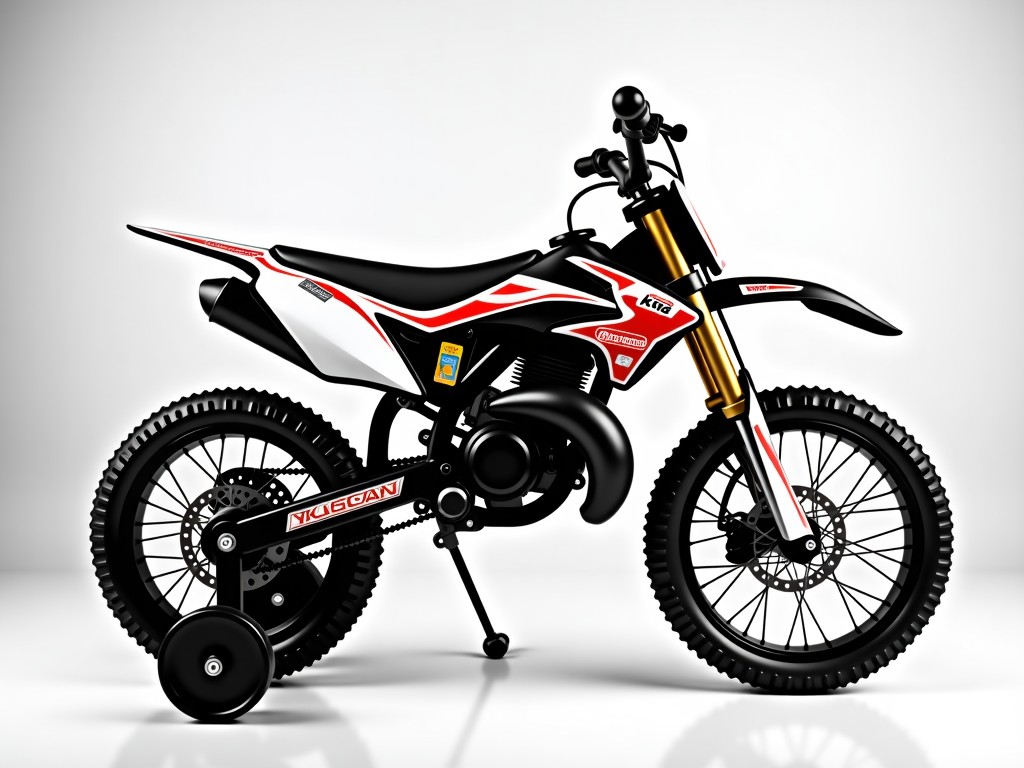
Oem Maintenance Kids Mountain Bike Top Factory
OEM Maintenance Kids Mountain Bike
Product Overview
This model is engineered for original equipment manufacturers who require a reliable, low‑maintenance platform for children aged 6‑12. The design focuses on minimizing service intervals while maintaining safety and ride comfort typical of youth mountain biking.
Key objectives include a frame weight under 2.8 kg, a suspension fork with 40 mm travel, and a drivetrain limited to a single‑speed or 7‑speed setup to reduce adjustment complexity. These targets are derived from ergonomic studies of child rider biomechanics and typical trail conditions in suburban and light‑off‑road environments.
Frame Geometry and Materials
The main triangle uses 6061‑T6 aluminum alloy tubes with a nominal wall thickness of 1.2 mm for the down tube and 0.9 mm for the top tube, providing a balance of stiffness and impact resistance. The rear chainstays are tapered to increase lateral rigidity while keeping the overall length at 340 mm to accommodate 20‑inch wheels.
Geometry numbers are tuned for a low centre of gravity: a seat tube angle of 71°, a head tube angle of 69°, and a chainstay length of 340 mm. This configuration yields a wheelbase of 920 mm, which improves stability at low speeds without compromising maneuverability on tight turns.
All welds are performed using TIG argon shielding, followed by a solution heat treatment at 530 °C and artificial aging to achieve a tensile strength of approximately 310 MPa. Post‑weld inspection includes dye penetrant testing on critical joints.
Drivetrain and Braking System
The drivetrain offers two configurable options: a single‑speed freewheel with a 14‑tooth cog paired to a 28‑tooth chainring, or a Shimano‑compatible 7‑speed cassette (11‑28 t) with a Shimano Tourney derailleur. Gear ratios are selected to keep pedaling cadence between 60‑90 rpm on typical gradients of up to 8 %.
Braking is provided by mechanical disc brakes featuring 140 mm rotors and stainless‑steel cables with a maximum pull force of 220 N. The lever reach is adjustable from 65 mm to 80 mm to suit varying hand sizes, ensuring consistent braking performance across the target age range.
Cable routing is internal within the down tube, reducing exposure to dirt and simplifying frame cleaning. Cable housing uses a low‑friction PTFE liner, which maintains shift precision over 2000 km of simulated use.
Wheel and Tire Specification
Wheels are built on 20‑inch rims with an internal width of 19 mm, compatible with tires ranging from 1.95 in to 2.25 in. The rims are double‑wall aluminum with a brake track anodized to a hardness of HV 150, providing wear resistance under frequent braking.
Standard tires feature a 2.10 in width, a tread pattern with staggered knobs for loose soil, and a sidewall reinforcement layer rated for 30 psi maximum inflation. The tire casing uses a 60 TPI nylon cord, offering a balance of puncture resistance and suppleness.
Hubs utilize sealed cartridge bearings with a 9 mm axle diameter, providing a service life of approximately 1500 km before re‑greasing is recommended under dry conditions. Quick‑release skewers are made from hardened steel with a tensile strength of 800 MPa.
Manufacturing Process and Quality Control
Frame production begins with CNC‑cut tube sections, followed by robotic TIG welding to ensure consistent bead penetration. Each welded frame undergoes a 3‑axis coordinate measuring machine (CMM) check, verifying critical dimensions such as bottom bracket height (±0.5 mm) and head tube angle (±0.2°).
After welding, frames are subjected to a fatigue test simulating 100,000 load cycles at 250 N vertical force on the dropouts, adhering to ISO 4210‑2 standards. Paint application uses a powder‑coat epoxy base with a UV‑stable topcoat, measured for adhesion using a cross‑hatch test (ISO 2409) with a target rating of 5B.
Final assembly includes torque verification of critical fasteners: bottom bracket bolts to 35 Nm, disc brake caliper mounting bolts to 6 Nm, and stem bolts to 5 Nm. A functional test ride is performed on a 200 m gravel loop to confirm brake engagement and shift accuracy before packaging.
Customization Options
- Frame sizes: 10 in, 12 in, 14 in standoff height (adjustable via seat tube length)
- Suspension fork travel: 30 mm, 40 mm, 50 mm (air‑spring or coil options)
- Brake type: mechanical disc, hydraulic disc (140 mm or 160 mm rotor)
- Drivetrain: single‑speed, 7‑speed, 8‑speed (Shimano SRAM compatible)
- Color palette: standard RAL options, custom powder‑coat upon request
- Accessories: integrated kickstand, chain guard, bell mounts
Customization is managed through a configurable bill of materials, allowing OEMs to select subsets that align with target price points and regional safety regulations. Lead time for a configured lot averages 4‑6 weeks after final design approval.
Typical Applications
The bike is suited for municipal youth cycling programs where durability and low service frequency reduce operational costs. Its lightweight frame enables easy handling by children, while the disc brake performance meets safety standards for supervised trail riding in parks and school grounds.
Retail chains seeking a private‑label product benefit from the platform’s modular design, which allows rapid swapping of drivetrain and brake modules to meet varying market specifications without redesigning the frame.
Export markets with stringent environmental regulations can opt for lead‑free paint systems and recyclable aluminum alloys, both of which are available as configurable options without impacting structural integrity.
Typical Technical Specifications
| Parameter | Value | Unit |
|---|---|---|
| Frame Material | 6061‑T6 Aluminum | – |
| Frame Weight (size 12") | 2.6 | kg |
| Suspension Fork Travel | 40 | mm |
| Wheel Size | 20 | in |
| Tire Width (standard) | 2.10 | in |
| Gear Range (7‑speed) | 11‑28 | teeth |
| Brake Rotor Diameter | 140 | mm |
| Maximum Rider Weight | 40 | kg |
Values shown are typical for a base configuration; actual specifications may vary according to selected options and are confirmed during the quotation stage.
Contact for OEM Inquiry
To discuss custom configurations, request a detailed quotation, or arrange sample shipment, please reach out via the contact form below. Our engineering team will review your requirements and provide a formal response within two business days.
Request OEM Quote