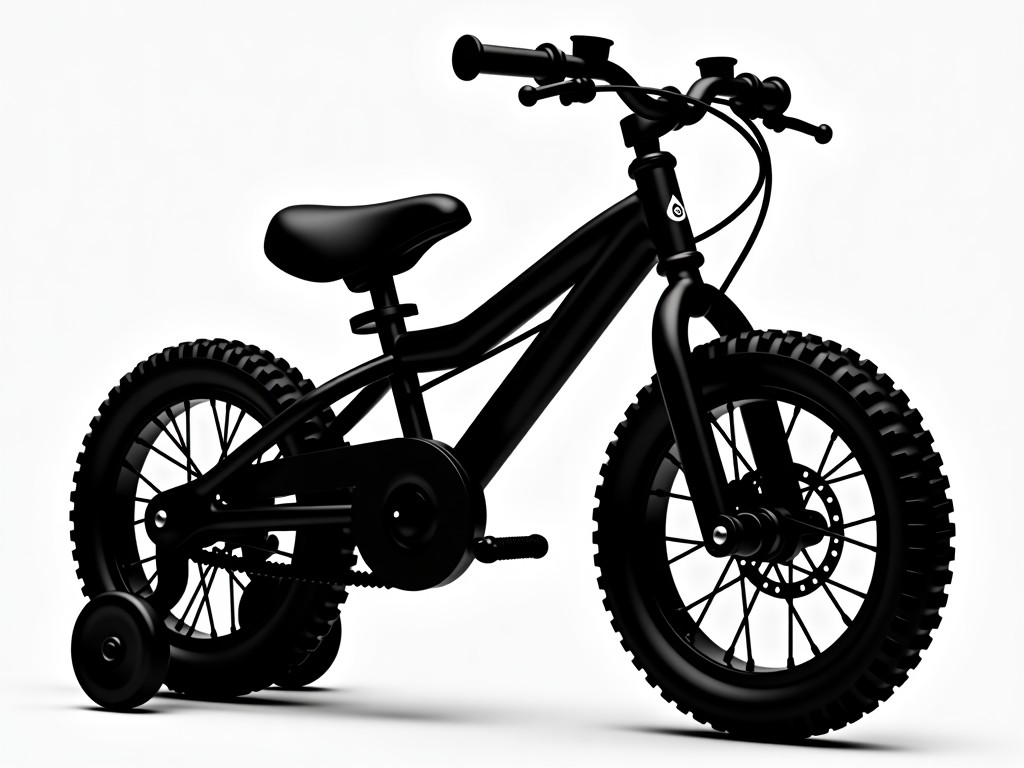
Factory Price Setup Kids Mountain Bike Supplier
Factory Price Setup Kids Mountain Bike Supplier
A kids mountain bike is designed for riders aged approximately 5 to 12 years who need a bicycle capable of handling light off‑road terrain while maintaining a manageable weight and size. The geometry emphasizes a lower standover height, shorter reach, and a wheelbase that provides stability without sacrificing maneuverability on trails, dirt paths, or paved surfaces with occasional gravel.
Key performance factors include frame stiffness to weight ratio, wheel diameter that matches rider inseam, braking power suited to lower speeds, and drivetrain simplicity that reduces maintenance. Understanding these parameters helps procurement engineers specify a model that balances durability, safety, and cost effectiveness for institutional or retail distribution.
Technical Specifications
| Parameter | Typical Value / Option |
|---|---|
| Frame Material | 6061-T6 aluminum alloy, tensile strength ≈310 MPa, density 2.7 g/cm³ |
| Wheel Size | 20 inch (ISO 406) or 24 inch (ISO 507) rim diameter, width 1.95‑2.2 in |
| Front Fork | Rigid steel fork (weight ≈1.1 kg) or 40 mm travel air‑sprung suspension fork (weight ≈1.6 kg) |
| Brake System | Linear pull (V‑brake) with aluminum arms, cable pull ratio 2:1; optional mechanical disc brake (160 mm rotor) |
| Drivetrain | Single speed (freewheel 14‑28 t) or 7‑speed Shimano‑compatible rear derailleur, gear range 14‑28 t |
| Finished Weight | 9.5 kg (20″ rigid) – 11.2 kg (24″ suspension) |
| Maximum Load | 40 kg (includes rider and light cargo) |
| Recommended Age / Height | 5‑8 years for 20″, 9‑12 years for 24″; inseam 45‑55 cm (20″) or 55‑65 cm (24″) |
| Safety Standards | EN 14766 (mountain bikes), ISO 8098 (cycles for young riders), CPSC 1512.2 (US) |
The 6061‑T6 alloy frame provides a favorable strength‑to‑weight ratio, allowing the bike to withstand repeated impacts from rocks and roots while keeping the overall mass low enough for younger riders to control. Wheel size selection directly influences rolling resistance and obstacle clearance; a 20″ wheel offers quicker acceleration for shorter inseams, whereas a 24″ wheel improves roll‑over capability on rougher terrain.
Brake choice affects stopping distance in wet or loose conditions. V‑brakes deliver sufficient torque for speeds under 15 km/h and are easy to service, while a mechanical disc brake offers consistent performance regardless of rim condition, at the cost of slight weight increase and cable complexity.
Drivetrain simplicity reduces the number of parts that can go out of adjustment. A single‑speed setup eliminates derailleur hanger alignment concerns, making it ideal for rental fleets or institutional programs where minimal maintenance is desired. The optional 7‑speed system provides gear progression for longer rides or varied gradients without overwhelming the rider.
Customization Options
- Frame color: powder‑coat in standard RAL shades or custom matte finishes upon request
- Wheel size: 20″ or 24″ rim with choice of tire tread (slick, semi‑slick, knobby)
- Brake type: V‑brake, mechanical disc, or hydraulic disc (available for higher volume orders)
- Gearing: single speed, 3‑speed internal hub, or 7‑speed external derailleur
- Accessories: kickstand, chain guard, bell, reflectors, or integrated lighting mounts
Quality control begins with incoming material inspection, where aluminum extrusion is checked for chemical composition and tensile strength using portable spectrometry. During frame fabrication, each weld joint undergoes visual inspection followed by ultrasonic testing to detect porosity or incomplete fusion at a 95 % confidence level.
After assembly, bicycles are subjected to a functional brake test measuring lever force required to achieve 0.5 g deceleration on a dry steel surface, ensuring compliance with EN 14766 braking performance thresholds. A fatigue test simulates 100 000 load cycles on the rear dropout and handlebar stem to verify long‑term durability under typical riding conditions.
Final inspection includes dimensional verification of wheel alignment (front fork offset within ±1 mm), headset preload torque, and chain tension. All units are packaged in double‑wall corrugated cartons with corner protectors and moisture‑barrier lining to withstand transit stresses.
Frequently Asked Questions
Can the frame dimensions be adjusted for different rider heights?
Frame geometry is fixed per wheel size; however, we offer adjustable seat posts with ±25 mm travel and interchangeable stem lengths (35 mm, 45 mm, 55 mm) to fine‑tune reach and stack without altering the frame.
What information is required before receiving a quotation?
Please provide the desired wheel size, brake system, drivetrain configuration, quantity, preferred color finish, and any required accessories. Delivery destination and required Incoterms help us calculate freight costs accurately.
Which materials are available for the fork and handlebars?
Forks are supplied in high‑tensile steel (4130) or 6061‑T6 aluminum; handlebars are 6061‑T6 aluminum with a 25.4 mm clamp diameter and optional rise of 0 mm, 10 mm, or 20 mm.
How is quality inspected before shipment?
Each batch undergoes random sampling (AQL 0.65) for visual defects, brake torque measurement, and frame alignment. Documentation includes inspection reports and a certificate of conformity to EN 14766.
What packaging methods are available for export shipments?
Standard packaging is a five‑layer corrugated box with internal foam end caps. For higher protection, we offer double‑boxing with interstitial PE foam and palletizing according to ISPM 15 standards.
What is the typical production lead time?
Lead time ranges from 25 to 35 working days after receipt of deposit and final artwork, depending on order size and customization complexity.
For detailed specifications, sample requests, or to discuss a custom configuration, please contact our sales team.
Request Quote