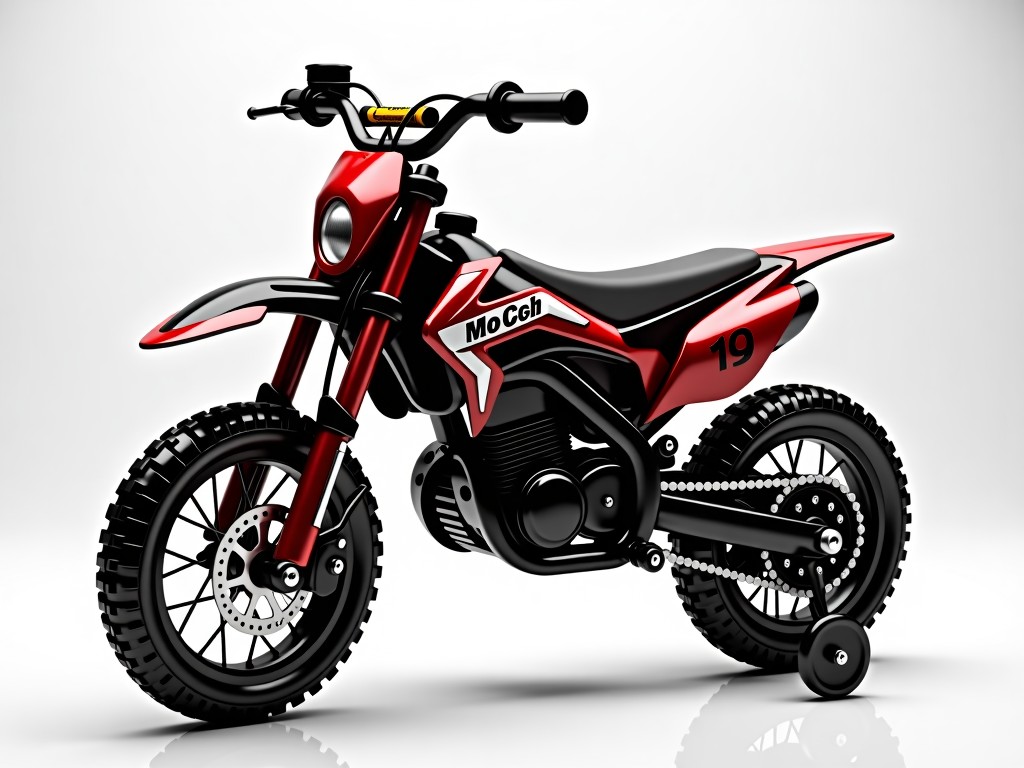
Custom Mens Mountain Bike For Kids Top Supplier
Custom Men's Mountain Bike for Kids – Supplier Overview
A men's mountain bike scaled for younger riders requires a frame geometry that balances reach, stack, and standover height while maintaining the durability expected from adult trail bikes. Engineers adjust tube lengths and angles to suit riders typically between 130 cm and 155 cm tall, ensuring proper weight distribution over the front and rear wheels.
Supplier capabilities focus on precision machining of 6061‑T6 aluminum or 4130 chromoly steel tubes, allowing custom butted profiles that reduce weight without compromising impact resistance. CNC‑cut dropouts and tapered headtube interfaces are standard to accommodate modern suspension forks and disc brake mounts.
The resulting build offers a typical frame weight of 1.8 kg to 2.2 kg depending on material choice, with a wheelbase that yields stable handling at speeds up to 25 km/h on mixed terrain. These measurable characteristics help reduce the risk of premature component fatigue and support longer service life.
Technical Specifications
Key dimensions and performance parameters are adjustable per project requirements. Typical ranges are listed below; exact values are confirmed during the quotation phase.
| Parameter | Typical Range / Option |
|---|---|
| Frame Material | 6061‑T6 aluminum (butted) or 4130 chromoly steel |
| Wheel Size | 24 in, 26 in, or 27.5 in (ISO 507, 559, 584) |
| Suspension Travel (front) | 80 mm – 120 mm (adjustable air or coil) |
| Brake Type | Hydraulic disc, 160 mm – 180 mm rotors |
| Gear Range | 1×9 – 1×12 drivetrain, 11‑42T to 10‑51T cassettes |
| Maximum Rider Weight | 80 kg (tested to ISO 4210‑2) |
Customization Options
- Frame geometry adjustments: reach (±10 mm), stack (±8 mm), headtube angle (±0.5°)
- Tube butting profiles: single, double, or triple butted for weight targeting
- Dropout standards: QR, thru‑axle 12 mm, or Boost 148 mm rear spacing
- Suspension fork compatibility: tapered steerer, 1.5 in to 1.8 in crown race
- Brake mount options: post‑mount or IS 200 mm adapter
- Paint and finish: powder coat colors, matte gloss levels, or clear anodize for aluminum
- Component groupsets: selection of Shimano, SRAM, or micro‑shift ranges
Manufacturing & Quality Control
Production begins with certified tube stock that undergoes spectral analysis to confirm alloy composition. Each tube is cut to length using CNC saws with ±0.1 mm tolerance, then machined for butting and tapering on multi‑axis mills.
Welding is performed using TIG with argon shielding; weld bead penetration is verified via ultrasonic inspection on a sample basis (1 % of frames). Post‑weld heat treatment is applied where required to restore mechanical properties.
Finished frames undergo dimensional inspection on a CMM, checking critical points such as bottom bracket shell width, headtube angle, and dropout alignment. Acceptance criteria are ±0.2 mm for linear dimensions and ±0.1° for angular measurements.
- Visual inspection for surface defects (scratches, porosity)
- Alignment check using laser tracking system
- Torque verification of all threaded fasteners to manufacturer specs
- Final assembly test ride on a dynamometer to confirm brake feel and shift indexing
Applications
Youth mountain‑bike leagues and school‑based cycling programs benefit from a frame that matches the rider’s anthropometry, reducing the need for compensatory stem length or saddle setback that can impair handling. Proper geometry improves cornering stability and lowers the risk of overreach injuries on technical descents.
Trail parks that offer rental fleets often require durable, low‑maintenance bikes capable of withstanding frequent use by riders of varying skill levels. Custom butted aluminum frames provide a favorable strength‑to‑weight ratio, while optional chromoly steel variants increase impact resistance for aggressive terrain.
OEMs developing entry‑level mountain‑bike lines can use the supplier’s modular fixture system to produce size‑specific batches without retooling, thereby shortening lead times and reducing inventory costs.
Frequently Asked Questions
Can dimensions be customized? Yes. Frame reach, stack, and angles are adjustable within the ranges noted in the specifications table; exact values are confirmed after receiving rider measurements.
What information is required before quotation? Rider height, inseam, intended wheel size, preferred suspension travel, brake type, and any specific component brand preferences.
What materials are available? 6061‑T6 aluminum (butted) and 4130 chromoly steel are standard; other alloys such as 7005 aluminum can be quoted upon request.
How is quality inspected? Dimensional checks are performed on a CMM with ±0.2 mm tolerance; welds are ultrasonically sampled; final assemblies undergo a functional test ride.
What packaging methods are available? Frames are packed in double‑wall corrugated cartons with corner protectors; complete bikes are boxed with foam‑filled inner trays and sealed with poly‑strapping.
How are export shipments protected? Palletized shipments use heat‑shrink wrap and corner boards; moisture‑absorbing desiccant packs are included for long‑haul transit.
What is the typical production lead time? Lead times range from 4 to 6 weeks for frame‑only orders and 6 to 8 weeks for complete builds, depending on component availability and customization complexity.
How are samples arranged? Sample frames can be produced after approval of technical drawings; shipping costs are borne by the requester, and the sample cost is credited toward a subsequent production order.
Request a Quote
To begin a custom mountain‑bike project, provide your rider specifications and preferred component list. Our engineering team will return a detailed quotation with lead‑time estimates within two business days.
Contact Us