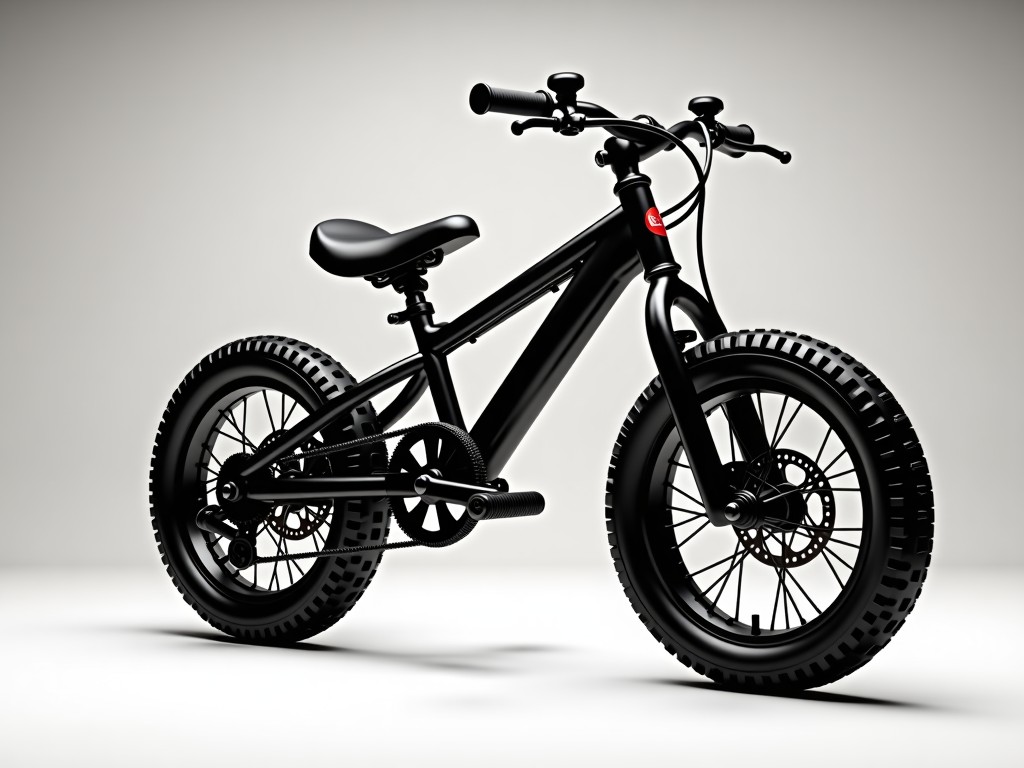
Custom Kids Mountain Bike For Kids Manufacturer
Custom Kids Mountain Bike – Manufacturer Overview
Design Purpose and Market Need
Manufacturers produce mountain bikes for children aged 5 to 12 who require scaled‑down geometry that maintains off‑road capability while fitting smaller riders. The frame must accommodate a rider inseam range of 45‑55 cm, allowing proper standover clearance and efficient power transfer. Unlike adult models, the bike prioritizes low standover height, lightweight construction, and components sized for reduced hand strength.
Frame Geometry and Material Selection
The main triangle uses 6061‑T6 aluminum tubing with a nominal wall thickness of 1.0 mm for the down tube and 0.9 mm for the top tube, yielding a frame weight of approximately 1.8 kg for a 12‑inch size. Head tube angle is set at 69° to balance steering stability with quick handling on technical trails. Seat tube angle of 73° positions the saddle over the crankset for effective pedaling geometry.
Chainstay length measures 380 mm, providing adequate rear‑wheel traction while keeping the wheelbase compact at 950 mm for a 12‑inch model. The rear dropout spacing follows the 135 mm standard to accommodate widely available disc‑brake hubs. All welds are performed using TIG technique with post‑weld heat treatment to relieve residual stress.
Drivetrain and Braking Systems
Crank arm length is matched to rider inseam, offered in 110 mm, 120 mm, and 130 mm options to maintain appropriate pedal clearance. The drivetrain employs a single‑ring setup with a 28‑tooth chainring and an 11‑34 t cassette, providing a gear range of 0.82‑3.18 m development per pedal revolution. Shift actuation uses a micro‑shift lever designed for ≤20 N actuation force, suitable for small hands.
Braking is handled by hydraulic disc brakes with 140 mm rotors front and rear, delivering consistent modulation across wet and dry conditions. Lever reach is adjustable from 70 mm to 90 mm to accommodate varying finger length. Brake fluid is mineral‑based, eliminating the need for periodic bleeding in typical usage cycles.
Wheel and Tire Specifications
Wheels are built on 20 mm internal width rims fabricated from 6061‑T6 aluminum, featuring a 24‑hole pattern with stainless‑steel spokes tensioned to 110 kgf. The rim ERD (effective rim diameter) measures 398 mm, compatible with 2.0‑2.2 inch wide tires. Tire bead seat diameter is 406 mm (ISO 20‑622).
Recommended tires are 20×2.0 in with a tread pattern optimized for loose gravel and root sections, offering a nominal casing pressure range of 30‑45 psi. Wheel inertia is kept low (<0.15 kg·m²) to aid acceleration for lighter riders. Hub shells use sealed cartridge bearings with a 9 mm axle diameter, ensuring smooth rotation under load.
Customization Options
- Frame size: 10‑inch, 12‑inch, 14‑inch wheel diameters with corresponding geometry scaling.
- Material: standard 6061‑T6 aluminum or optional 7005 alloy for increased tensile strength (up to 350 MPa).
- Color: powder‑coat finish available in any RAL code; matte or gloss options.
- Drivetrain: choice of 8‑speed, 9‑speed, or 10‑speed cassette; optional chain guide for chain retention.
- Brake rotor size: 140 mm (standard) or 160 mm for increased torque.
- Accessories: integrated kickstand, chain guard, or mounting points for front light and rear reflector.
Typical Technical Specifications
| Parameter | Value (Typical) | Notes |
|---|---|---|
| Frame Size (Wheel Diameter) | 10‑inch / 12‑inch / 14‑inch | Corresponds to rider height 100‑130 cm |
| Frame Weight (12‑inch) | 1.8 kg | Includes front fork, excludes components |
| Head Tube Angle | 69° | Balances stability and agility |
| Seat Tube Angle | 73° | Optimizes pedaling efficiency |
| Wheel Size | 20 mm internal width rim, 406 mm ERD | Accepts 2.0‑2.2 in tires |
| Gear Range | 0.82‑3.18 m development | Single‑ring 28 t front, 11‑34 t rear |
| Brake Rotor Diameter | 140 mm (standard) | Hydraulic disc, mineral oil |
Applications and Use Cases
Trail‑riding programs in schools and youth clubs benefit from a bike that fits a wide range of ages while maintaining durability for frequent use. The low standover height enables quick dismounts on technical sections, reducing the risk of falls for novice riders.
Rental fleets at bike parks choose the modular frame sizing to minimize inventory; a single frame size can be adapted with different wheel kits to serve multiple height brackets. The corrosion‑resistant powder coating extends service life in humid environments.
OEMs supplying aftermarket parts utilize the standardized dropout spacing and brake mount patterns, allowing easy integration of third‑party suspension forks or dropper posts when the rider advances to intermediate levels.
Quality Control and Testing
Each frame undergoes a visual inspection for weld uniformity followed by a dimensional check using a CMM to verify critical angles within ±0.5°. Fatigue testing is performed on a simulated trail load spectrum of 100,000 cycles at 250 N vertical load to ensure no crack initiation in the heat‑affected zone.
Component assembly includes torque verification of crank bolts to 35 Nm using a calibrated wrench, and brake lever reach is measured with a digital gauge to confirm compliance with the 70‑90 mm adjustment range. Final assembled bikes are subjected to a brake performance test measuring stopping distance from 15 km/h on a wet asphalt surface, targeting ≤4.5 m.
Packaging and Logistics
Frames are packed in double‑wall corrugated cartons with internal polyethylene foam corners to protect dropouts and head tubes. Each carton includes a silica‑gel packet to control moisture during transit. The packed dimensions for a 12‑inch frame are 110 cm × 20 cm × 15 cm, facilitating palletization of 30 units per standard Euro pallet.
Finished bikes are shipped in a semi‑knocked‑down configuration: front wheel, handlebar, and saddle are detached and secured in dedicated compartments within a reinforced cardboard box. The total gross weight per boxed bike averages 9.5 kg, allowing efficient container loading with a volumetric weight factor of 180 kg/m³.
Frequently Asked Questions
- Can the frame size be adjusted after production?
- No, the frame geometry is fixed; size changes require a different frame module.
- What information is needed for a quotation?
- Required details include desired wheel diameter, frame material, component group (drivetrain, brakes), quantity, and delivery destination.
- Which materials are available for the fork?
- Forks are offered in 6061‑T6 aluminum with a 1.1 mm leg wall thickness or optional carbon‑fiber blades for weight reduction below 800 g.
- How is quality inspected before shipment?
- Each bike receives a final functional check: gear shifting under load, brake lever feel, wheel true (<0.5 mm lateral runout), and torque verification of all fasteners.
- What packaging methods protect against damage?
- Frames are boxed with foam corner guards; complete bikes use internal partitions and edge protectors to prevent impact during handling.
- How are export shipments secured?
- Pallets are stretch‑wrapped and secured with poly‑strapping; containers receive additional corner bracing to minimize movement.
- What is the typical production lead time?
- Lead time ranges from 4‑6 weeks for standard configurations; custom paint or special components may extend this period by 1‑2 weeks.
- Can samples be arranged?
- Yes, sample units can be produced upon request; sample lead time is typically 2‑3 weeks and costs are credited against a subsequent order.
Next Steps
Engineers and procurement managers interested in obtaining a detailed quote or discussing specific customization requirements are invited to contact our technical sales team. Please provide the application details, required quantities, and any regulatory standards that must be met.