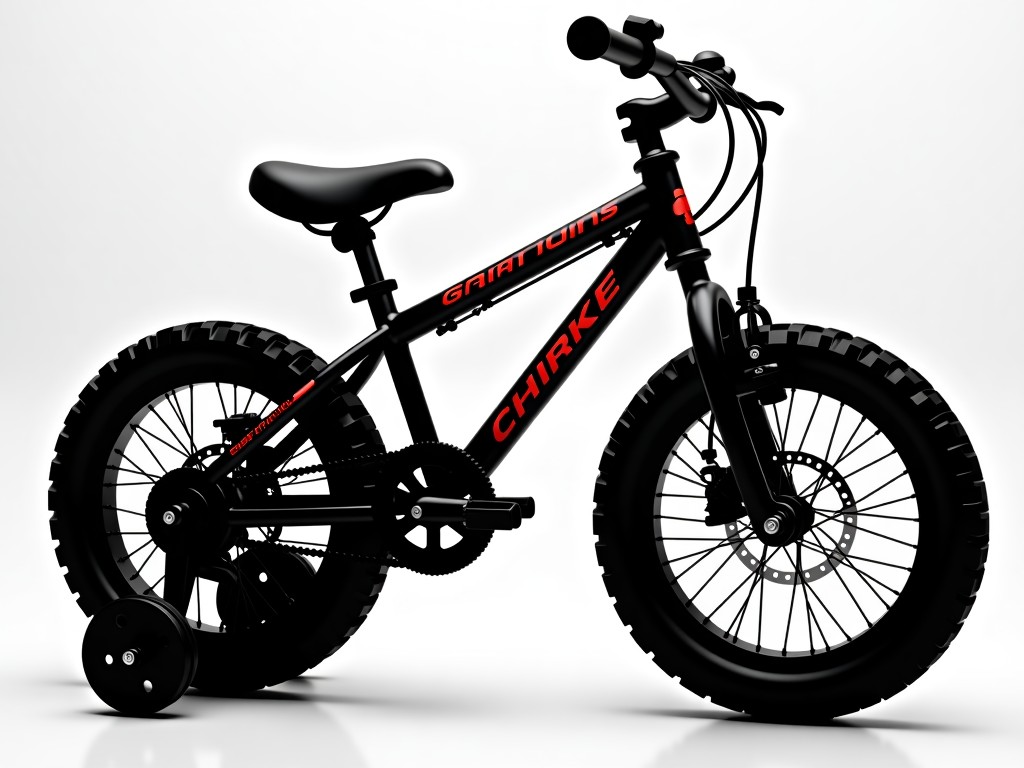
Custom Hardtail Mountain Bike For Kids Manufacturer
Custom hardtail mountain bike for kids Manufacturer
Overview
A hardtail mountain bike features a front suspension fork while the rear frame remains rigid, providing efficient power transfer and reduced maintenance compared to full‑suspension designs. For younger riders, the geometry is scaled to accommodate shorter stature and lighter weight, ensuring stable handling on varied terrain.
Manufacturers typically offer frame sizes ranging from 12‑inch to 16‑inch wheel diameters, with corresponding top tube lengths that keep the rider’s center of gravity low.
Frame Geometry
Key geometry parameters include head tube angle, seat tube angle, chainstay length, and bottom bracket drop. A slacker head tube angle (around 68‑70°) improves stability on descents, while a steeper seat tube angle (approximately 73‑75°) positions the rider over the pedals for efficient climbing.
Chainstay length for kids’ hardtails usually falls between 350 mm and 380 mm, balancing maneuverability with rear‑wheel traction. Bottom bracket drop of 20‑30 mm lowers the center of gravity without increasing pedal strike risk on rough trails.
Front Suspension Fork
The fork provides travel typically ranging from 80 mm to 100 mm, sufficient to absorb small to medium bumps while keeping the front end lightweight. Stanchion diameter is commonly 28 mm or 30 mm, influencing stiffness and weight.
Air‑sprung forks allow pressure adjustment to match rider weight, often between 20 kg and 45 kg, providing a tunable spring rate. Rebound damping is adjustable via a knob, enabling fine‑tuning of fork recovery speed.
Wheel and Tire Specifications
Wheel sizes are offered in 12‑inch, 14‑inch, and 16‑inch diameters, matching common kids’ mountain bike standards. Rim width internal measurement ranges from 19 mm to 23 mm, supporting tire widths of 2.0″ to 2.4″.
Tires feature a tread pattern with moderate knob height (around 4‑5 mm) for grip on loose soil and mud, while a reinforced sidewall reduces puncture risk. Recommended inflation pressure lies between 20 psi and 30 psi, depending on rider weight and terrain.
Material Options for the Frame
| Material | Density (g/cm³) | Typical Frame Weight (kg) | Flexural Modulus (GPa) | Cost Factor (relative) |
|---|---|---|---|---|
| Aluminum 6061 | 2.7 | 1.2‑1.5 | 68‑70 | 1.0 |
| Steel (Hi‑Ten) | 7.85 | 1.8‑2.2 | 200‑210 | 0.6 |
| Carbon Fiber Composite | 1.5‑1.6 | 0.9‑1.1 | 70‑80 (axial) | 2.5‑3.0 |
Selection depends on priorities such as weight target, budget, and desired ride feel.
Customization Options
Buyers can specify frame size based on rider inseam, with adjustable ranges that accommodate growth over one to two seasons. Options include choice of wheel diameter, tire width, fork travel, and drivetrain configuration (single‑speed, 7‑speed, or 9‑speed).
Additional customization encompasses paint color, graphics, and component branding. For OEM orders, mounting points for accessories such as bottle cages, kickstands, or chain guides can be positioned according to the client’s layout.
Manufacturing Process
Frames are produced using hydroforming for aluminum tubes, which creates complex shapes with consistent wall thickness while reducing weight. Steel frames employ mandrel bending followed by TIG welding, ensuring penetration depth of at least 0.8 mm for joint strength.
Carbon frames utilize lay‑up of pre‑impregnated sheets in a mold, cured under vacuum pressure at 120‑130 °C. CNC machining is applied to dropouts and brake mounts to achieve tolerance of ±0.1 mm. Final assembly includes torque‑controlled fastening of the fork, headset, and crankset to manufacturer‑specified values.
Quality Control and Testing
Dimensional inspection verifies critical measurements such as head tube angle (±0.5°), chainstay length (±1 mm), and bottom bracket height (±2 mm). Each frame undergoes a fatigue test simulating 100,000 load cycles at 1.5× rider weight to ensure durability.
Non‑destructive methods include ultrasonic inspection of welds and visual inspection of paint finish for adhesion and gloss levels (≥80 units). Final bike assembly is checked for brake lever reach, gear indexing, and wheel true (<0.5 mm lateral runout).
Applications
Custom hardtail mountain bikes for kids are suited for youth trail riding programs, school physical education curricula, and rental fleets at bike parks. The rigid rear end simplifies maintenance, lowering operational costs for operators managing multiple units.
Because the frame geometry can be tuned to the rider’s inseam, the bike supports skill development from beginner to intermediate levels, providing a platform that grows with the child’s ability without requiring a full replacement.
Frequently Asked Questions
- Can the frame dimensions be customized? Yes, top tube length, seat tube angle, and chainstay length can be adjusted according to the rider’s inseam and intended use.
- What information is required before quotation? Required details include rider height or inseam, preferred wheel size, desired suspension travel, material preference, and any specific component selections.
- Which materials are available for the frame? Aluminum 6061, high‑tensile steel, and carbon fiber composite are offered, each with distinct weight, stiffness, and cost characteristics.
- How is quality inspected? Every frame undergoes dimensional verification, fatigue testing, and non‑destructive weld inspection before painting.
- What packaging methods are used for export? Bikes are packed in double‑wall cardboard boxes with corner protectors, foam spacers for the fork and wheels, and sealed with plastic strapping to prevent movement during transit.