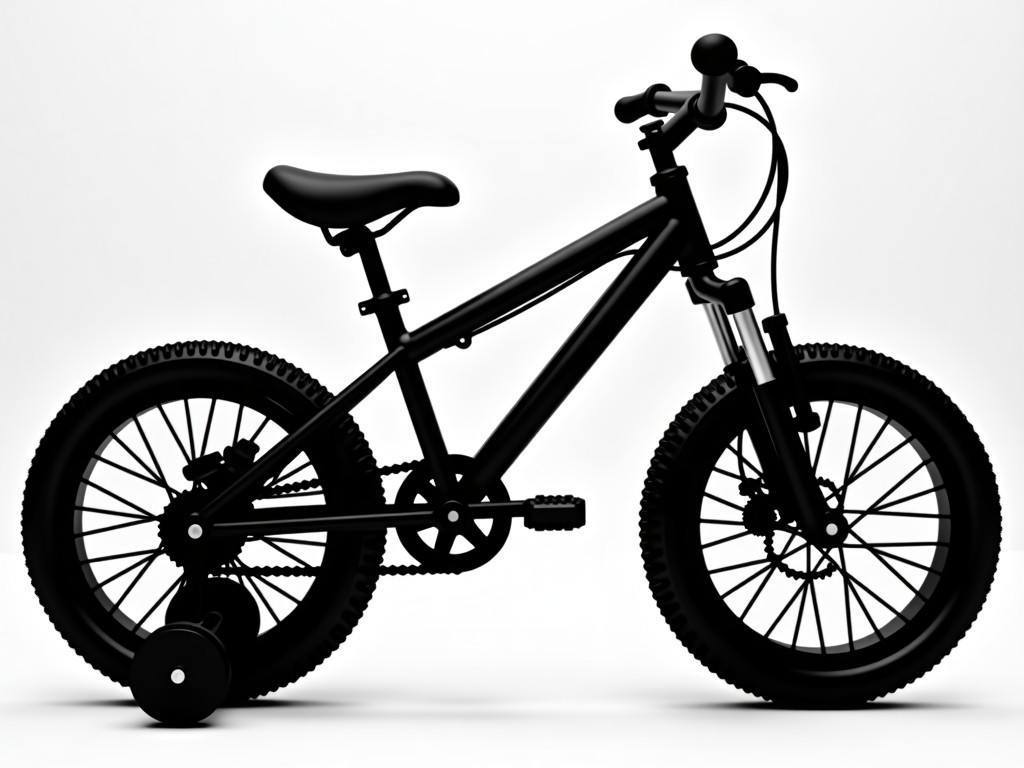
Custom Carbon 24 Inch Kids Mountain Bike Company
Custom Carbon 24-Inch Kids Mountain Bike
This product page details the engineering considerations behind a carbon fiber frame designed specifically for 24‑inch wheel kids mountain bikes, focusing on geometry, layup, and manufacturability.
Frame Geometry and Design
The frame employs a low‑top‑tube geometry with a 68 mm head‑tube angle and 73 mm seat‑tube angle, providing a stable platform while allowing easy standover clearance for riders aged 7‑12.
Carbon Fiber Layup and Mechanical Properties
A quasi‑isotropic layup combines 0°, ±45°, and 90° plies in a 2 mm wall thickness, delivering a longitudinal tensile modulus of approximately 70 GPa and a specific strength exceeding 1.5 GN·m/kg.
Target frame weight is 1.2 kg (±0.05 kg) for the raw layup before hardware, which translates to a complete bike weight under 8 kg when equipped with lightweight components.
Customization Options
- Adjustable rear dropout spacing (130 mm or 135 mm) to accommodate different hub standards.
- Choice of matte or gloss UV‑clear coat finishes in RAL‑matched colors.
- Integrated ISCG‑05 tabs for chainguide mounting.
- Optional internal cable routing ports for hydraulic brake lines.
Manufacturing Process
The frames are produced using a computer‑controlled filament winding machine that places prepreg tow at precise angles, followed by vacuum bagging and autoclave cure at 180 °C under 6 bar pressure for 90 minutes.
After demolding, each frame undergoes a CNC machining step to achieve tolerance‑critical interfaces (head‑tube, bottom‑bracket, dropouts) within ±0.1 mm.
Quality Control and Testing
- Ultrasonic C‑scan inspection of each laminate to detect voids larger than 0.2 mm.
- Three‑point bend test on a representative coupon to verify flexural strength ≥ 800 MPa.
- Impact resistance test per ASTM D7136, recording energy absorption ≥ 15 J.
- Final assembly check includes torque verification of critical bolts to manufacturer specs.
Technical Data
| Parameter | Typical Value |
|---|---|
| Frame Weight (raw) | 1.2 kg ±0.05 kg |
| Stiffness (BB to HT) | 45 Nm/deg |
| Maximum Rider Weight | 50 kg |
| Operating Temperature Range | ‑20 °C to +60 °C |
| UV‑Stable Clear Coat Thickness | 40 µm |
Applications
A lightweight carbon frame reduces the inertial load that a child must accelerate, improving handling on technical trails and lowering fatigue during longer rides. The high stiffness‑to‑weight ratio also maintains precise steering response when the rider stands to pedal, a common maneuver on kids’ mountain bikes.
Frequently Asked Questions
| Question | Answer |
|---|---|
| Can the frame dimensions be altered for different wheel sizes? | Yes, the same layup can be scaled to 20‑inch or 26‑inch models; geometry adjustments are quoted per project. |
| What information is required before a quotation? | Detailed geometry drawings, desired component specifications (brake mount type, dropout spacing), finish preferences, and estimated annual volume. |
| Which material options are available besides carbon fiber? | Aluminum 6061‑T6 and scandium‑alloy tubes are offered as alternatives; mechanical properties differ and are documented in separate data sheets. |
| How is quality inspected? | Each frame receives ultrasonic C‑scan, mechanical coupon testing, and final dimensional verification as outlined in the QC section. |
| What packaging methods are used for export? | Frames are placed in double‑wall corrugated boxes with corner protectors, then palletized and stretch‑wrapped; optional foam inserts are available upon request. |
| What is the typical production lead time? | Lead time ranges from 6 to 8 weeks after receipt of approved tooling and deposit, depending on order size. |
Get a Technical Quote
To discuss custom geometry, layup adjustments, or volume pricing, provide your project specifications via the contact form.
Request Quote