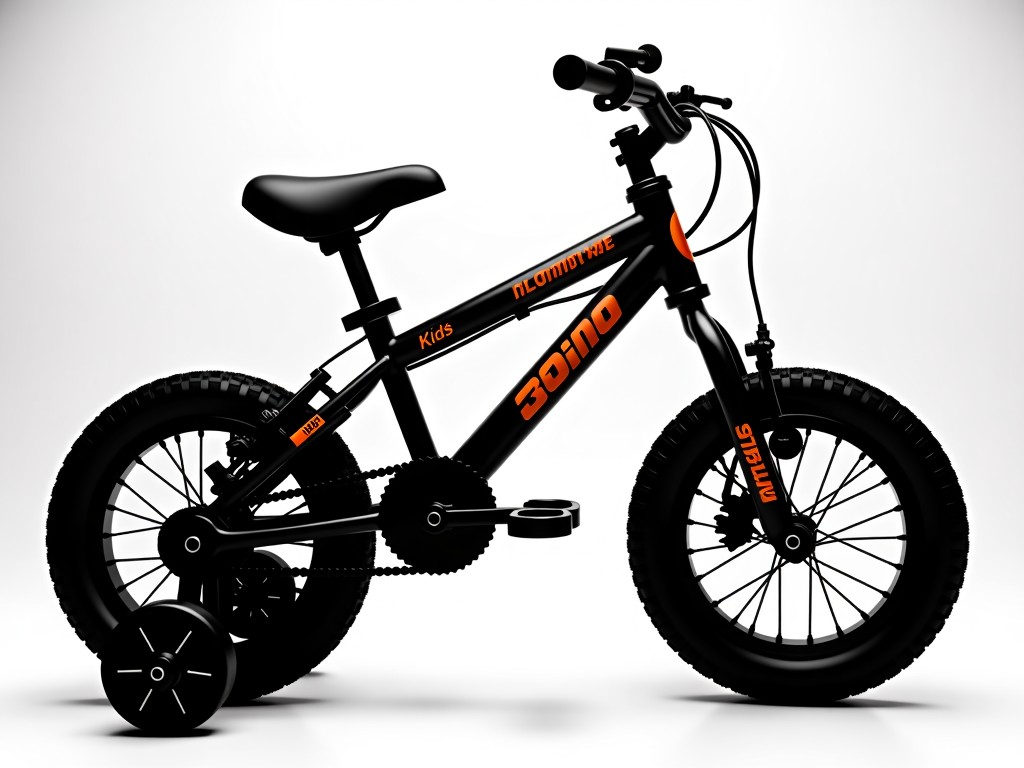
Custom Best 24 Inch Kids Mountain Bike Factory
Custom 24‑Inch Kids Mountain Bike Factory
This page explains the engineering and production considerations for a factory that builds custom 24‑inch mountain bikes intended for children aged 7‑12. Understanding these details helps procurement managers evaluate capability, tolerances, and long‑term value before placing an order.
Frame Materials and Geometry
The primary frame options are 6061‑T6 aluminum alloy, high‑tensile steel, or a hybrid aluminum‑carbon lay‑up. Aluminum provides a typical weight of 1.8 kg for the frame alone, while steel adds about 0.4 kg but increases impact resistance. Carbon lay‑up can reduce weight to 1.5 kg but requires higher tooling investment.
Geometry is tuned for a low standover height (typically 580 mm) and a short reach (around 340 mm) to accommodate a child’s proportions while maintaining stability. Custom adjustments to head‑tube angle (68°–72°) and seat‑tube angle (73°–75°) are possible within ±2° to match rider inseam or intended terrain.
Drivetrain and Braking Options
Drivetrain choices range from a single‑speed freewheel (simplicity, low maintenance) to a 7‑speed Shimano Tourney derailleur system offering a gear range of 14‑28 T. Chain tension is managed via a horizontal dropout with adjustable tension screws, allowing chainline tolerance of ±0.5 mm.
Braking systems include linear‑pull V‑brakes (average lever force 20 N) or mechanical disc brakes with 140 mm rotors (lever force ~15 N). Disc options provide consistent performance in wet conditions and are compatible with ISO mount adapters for future upgrades.
Suspension and Fork Choices
Forks are available as rigid steel or aluminum blades, or as 50 mm travel air‑sprung suspension forks with adjustable rebound. Rigid forks weigh approximately 0.6 kg, while suspension forks add roughly 0.9 kg but improve traction on rough trails.
Suspension forks incorporate a 20 mm internal damper with a lockout lever, enabling riders to switch between active and locked modes. Fork stanchion diameter is typically 28 mm, with bushing clearance held to 0.1 mm to prevent play.
Customization Capabilities
- Frame size adjustments in 5 mm increments (seat‑tube length 320–380 mm)
- Paint finishes: powder‑coat solid colors, metallic flakes, or custom graphics via UV‑printed decals
- Component branding: OEM logos laser‑etched on crank arms, hubs, or head‑tube caps
- Accessory mounts: integrated bottle‑bosses, rack mounts, or kick‑stand plates
- Optional accessories: kickstand, chain guard, bell, or reflective tape kits
Quality Assurance and Testing
Each frame undergoes a dimensional inspection using a CMM with a repeatability of ±0.02 mm, focusing on critical interfaces such as bottom‑bracket shell width (68 mm ±0.1 mm) and head‑tube press‑fit tolerance. Welds are visually inspected and subjected to ultrasonic testing for porosity detection.
Completed bikes are subjected to a dynamic load test simulating 150 kg·mm of impact on the fork crown and a fatigue test of 10 000 cycles at 250 Nm torque on the crank. Final inspection includes brake lever pull measurement (≤20 mm travel) and gear indexing verification across all speeds.
Production Lead Times and Order Quantities
Tooling for a new frame geometry typically requires 4–6 weeks, after which first‑article samples are delivered within 2 weeks. Standard production runs start at a minimum order quantity (MOQ) of 200 units, with lead times of 35–45 days depending on selected components and finish complexity.
For orders exceeding 1 000 units, the factory can implement a staggered shipment schedule to reduce inventory holding costs. All shipments are packed in double‑wall corrugated cartons with internal foam corners, achieving an ISTA 3A performance level for transit protection.
Typical Specifications
| Parameter | Typical Value | Customizable? |
|---|---|---|
| Frame Material | 6061‑T6 Aluminum | Yes (Steel, Carbon) |
| Wheel Size | 24 inch (ISO 507) | No |
| Front Fork Travel | 0 mm (Rigid) / 50 mm (Suspension) | Yes |
| Brake Type | V‑brake | Yes (Mechanical Disc) |
| Gear Speeds | 1‑Speed (Single) / 7‑Speed | Yes |
| Maximum Rider Weight | 45 kg | No (Design limit) |
| Finish | Powder‑Coat Matte Black | Yes (Any RAL, Graphics) |
Applications and Market Fit
The 24‑inch kids mountain bike serves OEMs that supply specialty retail chains, sporting‑goods distributors, and regional bike‑share programs targeting youth outdoor activity. Its adjustable geometry allows a single frame platform to accommodate multiple rider inseam ranges, reducing SKU proliferation for distributors.
For aftermarket partners, the ability to laser‑etch logos on the head‑tube and crank arms provides a low‑cost branding avenue without requiring separate tooling. The bike’s compliance with EN 14764 (city and trekking bicycles) and ASTM F963 (toy safety) simplifies certification for European and North American markets.
Frequently Asked Questions
- Can dimensions be customized? Yes – seat‑tube length, head‑tube angle, and chainstay length can be adjusted in 5 mm or 1° increments based on provided rider measurements.
- What information is required before quotation? Detailed bike usage profile (terrain, rider weight range), desired component groups, finish specifications, and expected annual volume.
- What materials are available for the frame? 6061‑T6 aluminum alloy, high‑tensile steel, and optional aluminum‑carbon hybrid lay‑up.
- How is quality inspected? Dimensional CMM checks, weld ultrasonic testing, dynamic load and fatigue tests, and final functional brake/gear verification.
- What packaging methods are available? Standard double‑wall cartons with foam corners; optional palletized crating for bulk sea freight.
- How are export shipments protected? Each carton meets ISTA 3A standards; additional corner boards and moisture‑barrier liners are available upon request.
- What is the typical production lead time? 4–6 weeks for tooling, followed by 35–45 days for production runs; faster tracks exist for repeat orders.
- How are samples arranged? Pre‑production samples are shipped via express courier after tooling approval; sample fees are credited against the first production order.
Ready to discuss a custom 24‑inch kids mountain bike program? Use the link below to initiate a quotation request and share your project specifics.
Request a Quote