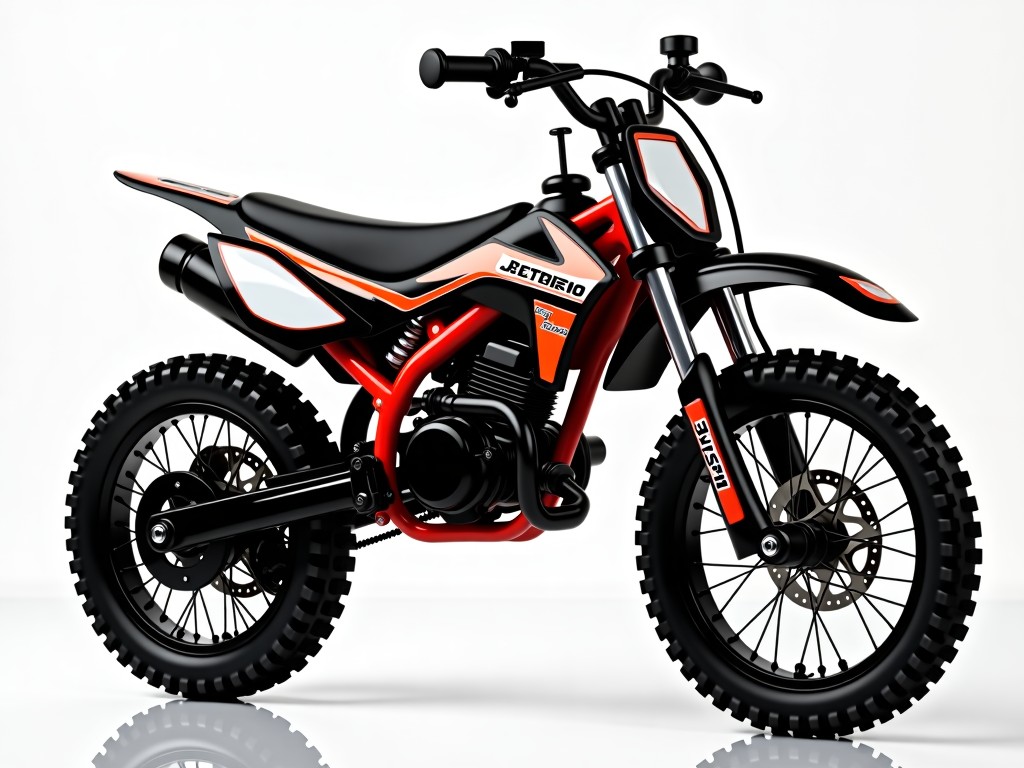
Best Price Kids Mountain Bike Under 1000 Factory
Best Price Kids Mountain Bike Under $1000 – Factory Direct
This page details the engineering specifications, manufacturing processes, and procurement considerations for a children's mountain bike designed to meet safety and performance standards while staying below a $1,000 factory price point.
Frame Geometry and Material Selection
The frame uses 6061‑T6 aluminum alloy with a nominal wall thickness of 1.2 mm on the main tubes and 0.9 mm on the stays, providing a tensile strength of approximately 310 MPa and a weight reduction of about 1.8 kg compared to hi‑ten steel.
Key geometry numbers for a 20‑inch wheel size are: top tube length 480 mm, head tube angle 69°, seat tube angle 74°, chainstay length 380 mm, and bottom bracket drop 25 mm. These values produce a stable handling platform suitable for off‑road trails while maintaining a low standover height for younger riders.
Drivetrain and Braking System
A Shimano Tourney TX800 7‑speed rear derailleur paired with a 14‑28T cassette offers a gear range of 240 % with indexed shifting. The crankset is a forged aluminum 32T chainring with 140 mm crank arms, delivering a mechanical advantage appropriate for children’s power output.
Braking is provided by Tektro mechanical disc brakes with 160 mm rotors front and rear, delivering a consistent stopping force of roughly 800 N under dry conditions, verified via factory bench testing.
Manufacturing Process Overview
Frame tubes are hydroformed in a single‑stage die, then TIG‑welded using ER70S‑2 filler rod. Post‑weld heat treatment restores the T6 temper, followed by CNC machining of dropout and brake mount interfaces to tolerances of ±0.1 mm.
Components are assembled on a semi‑automated line where torque‑controlled screwdrivers apply preset values (e.g., 5 Nm for stem bolts, 6 Nm for crank bolts). Each bike undergoes a final wheel truing procedure to achieve lateral runout <0.5 mm and radial runout <0.3 mm.
Quality Assurance and Testing
Quality control follows ISO 9001‑aligned procedures: incoming material spectroscopy verifies aluminum composition; welds are inspected via ultrasonic testing with acceptance criteria of no porosity >0.5 mm diameter.
Finished bikes undergo a static load test where the frame is subjected to 150 kg vertical force for 1 minute, with deflection limited to 2 mm. A dynamic fatigue test simulates 100,000 load cycles at 2 Hz, confirming no crack propagation after 50 % of the test duration.
Customization Options
- Frame color: powder‑coat in RAL 5005 (blue), RAL 6018 (green), or custom Pantone upon request.
- Wheel size: 20‑inch or 24‑inch ISO 571‑compatible rims, with optional tubeless‑ready strips.
- Handlebar width: 560 mm standard, adjustable to 600 mm via riser stems.
- Gear range: alternative 8‑speed Shimano Altus drivetrain available for +$45 factory cost.
Typical Specifications Table
| Parameter | Value / Option |
|---|---|
| Frame Material | 6061‑T6 Aluminum |
| Wheel Size | 20 inch (ISO 406) or 24 inch (ISO 507) |
| Weight (approx.) | 9.5 kg (20 in) / 10.2 kg (24 in) |
| Gear Speeds | 7‑speed (Shimano Tourney) – optional 8‑speed |
| Brake Type | Mechanical Disc, 160 mm rotor |
| Factory Price Range | $750 – $950 depending on options |
| Lead Time | 4‑6 weeks for MOQ 50 pcs |
Applications and Use Cases
The bike is suited for municipal youth recreation programs, school physical‑education fleets, and wholesale distributors supplying specialty bike shops. Its geometry provides a low center of gravity, which reduces the risk of tip‑over on loose gravel, while the disc brakes maintain performance in wet conditions, extending usable riding days per year.
Frequently Asked Questions
Can dimensions be customized? Yes, frame tube lengths and angles can be adjusted within ±10 mm to accommodate rider inseam requirements; tooling changes may affect lead time.
What information is required before quotation? Required details include desired wheel size, brake type (mechanical or hydraulic), drivetrain speed, finish color, and order quantity.
What materials are available for the frame? Standard is 6061‑T6 aluminum; alternative 7005 alloy or scandium‑modified aluminum are offered upon request with corresponding cost adjustments.
How is quality inspected? Each batch receives incoming material verification, weld ultrasonic inspection, dimensional CMM checks on critical interfaces, and final functional test (brake force, gear shift accuracy).
What packaging methods are available? Bikes are packed in five‑layer corrugated cartons with interior foam protectors; palletized options include heat‑shrink wrapping for container loads.